Posted: Jan 1 '27
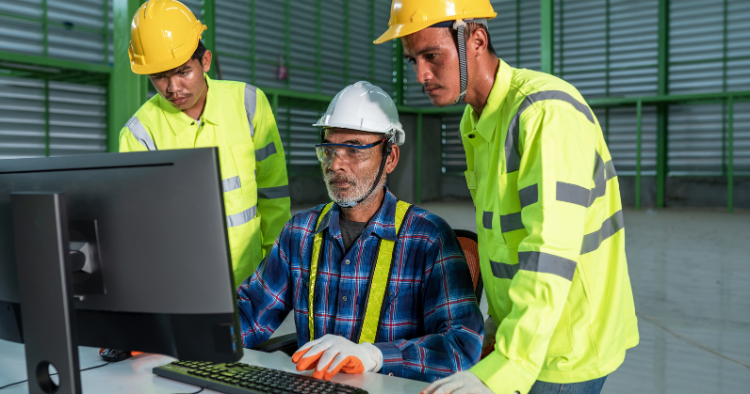
Online safety training in Alberta works best as the first half of a blended plan: workers complete the theory on a screen, then prove their
rope handling and rescue skills in person with qualified instructors. Online modules cover hazards, regulations and equipment knowledge on
each worker's own schedule, while hands-on sessions build the physical skills that no video can teach. Reach out to MI Safety for a
consultation on building a blended plan for your height crews.
Online safety training in Alberta suits any topic where a worker needs to know something. Hazard awareness, regulatory background, equipment terminology and company policy all translate well to a screen. Workers can review the material at their own pace, repeat sections and finish it before they ever set foot on a tower or turbine. Crews that arrive with this knowledge already in place spend their in-person time practising instead of sitting through lectures.

Rope work is physical. A worker can watch a video of a knot and still fumble it with cold hands at height. Rescue adds time pressure, weight and a person who depends on the result, and none of that comes through in a browser window.
That is why our fall rescue and high angle rescue training puts instruction and hands-on practice together. We offer 8, 16 and 40 hour formats, so the depth can match the complexity of your site. Companies book these courses as groups, and sessions can run at our Devon facility, where our three training towers range from 70 to 174 feet, or at your own site.
A certificate shows that a worker finished a course. Competence shows in how that worker performs with real equipment under real conditions. Someone who passed an online quiz may still hesitate when it is time to put knowledge into practice at height.
Supervisors should see skills demonstrated before they assign anyone to height work. Training with your own equipment helps here, because workers become familiar with the systems they will actually use on the job. Many of our instructors are active firefighters and emergency response professionals, so they know what competent performance looks like when conditions are difficult. Employers are responsible for making sure workers are trained to do their work safely, and a completion email on its own rarely proves that.

When workers finish the theory before the in-person session, the instructor can start with practical work right away. That trims classroom time, which means fewer days with a crew pulled off the job. It matters most for tower and turbine contractors, where qualified height workers are hard to replace.
Crews working in different locations can complete the online portion on their own, then come together for one hands-on session. From our Devon facility, we work with companies across the Greater Edmonton Area and the rest of Alberta, and can bring the training to your site when travelling to us does not suit your schedule.
Training records often end up scattered across inboxes, learning platforms and filing cabinets. Keep one file for each worker that holds the online completion record, the in-person course name, the date and the expiry. Certification cards for our fall protection, confined space and high angle rescue courses are valid for 3 years, so the renewal date belongs on that file from the first day.
When an auditor, an insurer or a client asks how a worker was trained, a single file answers the question in minutes. It also shows that your plan covers both knowledge and practical ability.

This sample shows how the pieces can fit together for a new worker joining a tower or turbine crew.
We adjust every step to fit your equipment, hazards and crew size.

Can online safety training in Alberta replace in-person fall protection training?
No. Online modules can support a fall protection program, but they do not replace hands-on practice with harnesses, anchors and rescue equipment. Our in-person fall protection course gives workers that practice.
How much does a blended training plan cost?
The cost depends on crew size, course formats and location, so we quote each plan individually. Contact MI Safety for a quote and availability.
Can you train our crew at our own site?
Yes. Group training can run at your site or at our Devon facility. We can build the hands-on portion around your equipment and the hazards your crew faces.
How do we book training for a crew?
Companies book groups, so start by telling us your crew size, your location and your timeline. We will confirm availability and recommend the right course formats.
Call or message our team to book a consultation for your height crews.