Posted: Oct 1
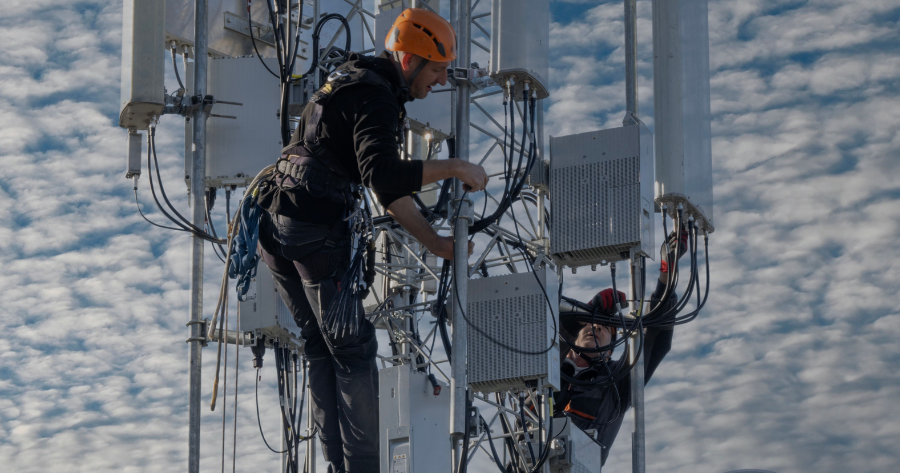
The rollout of 5G infrastructure across the Greater Edmonton Area is changing what tower rescue training looks like for crews. For decades,
rescue programs were built around macro towers: tall, isolated structures with predictable anchor points and long, deliberate rescue
sequences. Small cell installations do not follow that pattern. They are shorter, more numerous, and often mounted on structures never
designed with rescue access in mind, from streetlight poles to rooftop parapets in dense urban areas. Crews who trained exclusively on macro
tower scenarios are now finding gaps in their skill sets as small cell work becomes a bigger share of their job. If your crew needs safety
training in Edmonton that reflects this shift, MI Safety can help you close those gaps before they become a problem on site. Contact us
today to make sure your crew's rescue training keeps up!
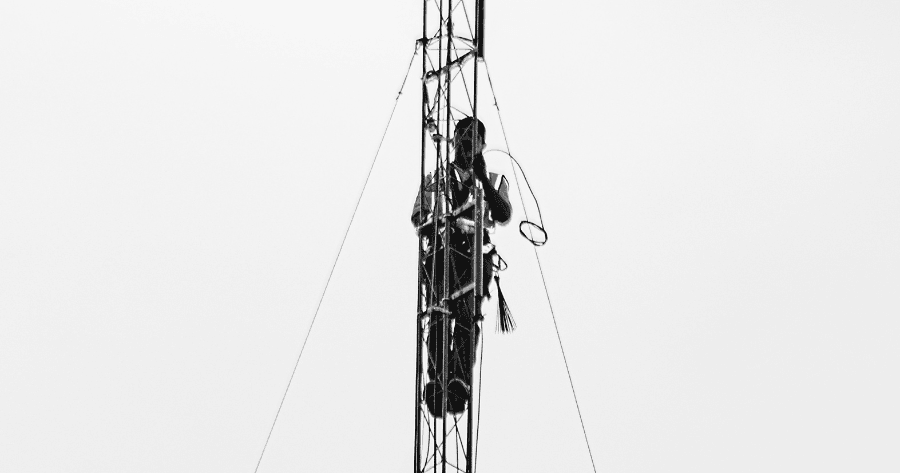
Small cell technology exists to solve a coverage problem that macro towers cannot handle on their own. 5G networks rely on high-frequency
signals that travel shorter distances, so carriers need many more low-height sites packed closer together to maintain coverage. Instead of
one tall tower serving a wide radius, a single neighbourhood might now have a dozen small cell nodes mounted on utility poles, building
facades, and rooftop equipment. This changes the physical environment rescue crews are working in. Sites are lower to the ground, but they
come with their own hazards: tight rooftop access, proximity to pedestrians and traffic, and mounting hardware that was not built with a
rescue harness attachment point in mind. A crew trained only for macro tower geometry can find themselves improvising on a small cell job,
and improvising is exactly what proper training exists to prevent.
Lower height does not mean lower risk. A fall from 20 metres on a rooftop small cell installation can be just as fatal as a fall from 80
metres on a macro tower, and the rescue window is often shorter because ground crews and emergency services can reach the scene faster,
which means the on-site team needs to be ready to act immediately. Rooftop rescues also introduce complications that macro tower rescues
rarely involve, such as navigating HVAC units, parapet walls, and limited anchor points across a crowded roof surface. Urban small cell
sites frequently sit close to occupied buildings, which adds noise, sightline, and public safety considerations that a technician trained
purely on remote macro tower protocols may not have practiced. Rescue training has to
account for these lower-height, higher-clutter environments specifically, not as a footnote to macro tower procedure but as its own
scenario type.
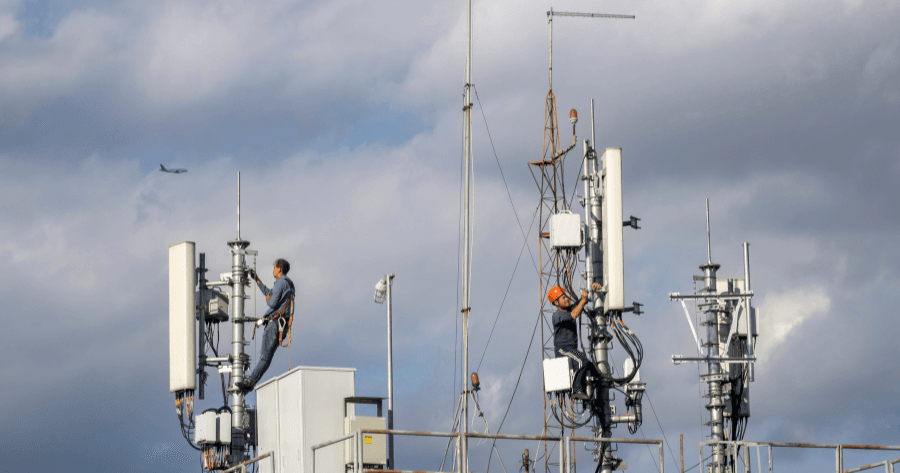
Small cell buildout projects move differently than macro tower work. Instead of one or two large installations over the course of a project,
crews are often cycling through dozens of smaller sites in a single week. That pace changes how crews should be structured for rescue
readiness. A rescue-competent person needs to be present and current on every shift, not just assigned to larger jobs where the perceived
risk feels higher. High-volume small cell work also means more total exposure hours across a wider range of site types, so crew composition
should reflect that variety rather than assuming one rescue specialist can cover every configuration a project might throw at them. Building
rescue capability across more of the crew, rather than concentrating it in one or two people, keeps response times fast when a site does not
match the standard training scenario.
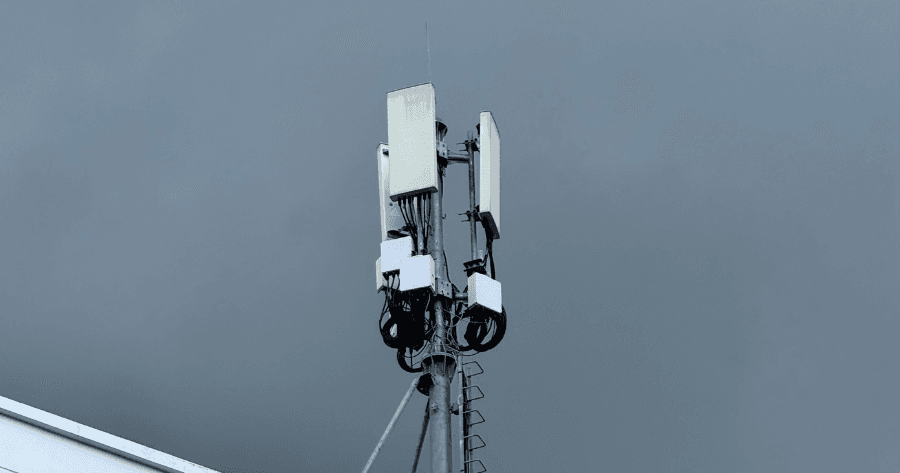
Technicians who have spent years on macro tower jobs often carry assumptions into small cell work that do not hold up. Anchor selection, descent technique, and communication protocols were built around a certain type of structure, and those habits need to be actively updated rather than assumed to transfer. Refresher training for crews making this shift should walk through the specific mounting hardware, access points, and rescue geometry found on small cell installations, ideally using the equipment types the crew will actually encounter. This is not about starting from zero. Experienced tower rescue technicians bring real skill to the table, but a refresher that addresses the differences directly closes the gap faster than relying on general experience alone.
Small cell sites are frequently located in places the public can see, use, and walk past every day. That changes the operational picture for
a rescue scenario. Crews need protocols for managing sidewalk and street proximity, coordinating with property owners or building management
for rooftop access, and keeping a rescue response contained without creating a wider public safety incident. Documentation and access
planning matter more here than they typically do for a remote macro tower site, since a delayed response caused by an access issue, like a
locked rooftop door or an unclear point of contact, can cost valuable time in an emergency. Training that only covers isolated, low-traffic
environments leaves out an entire category of risk that is now common on small cell projects.
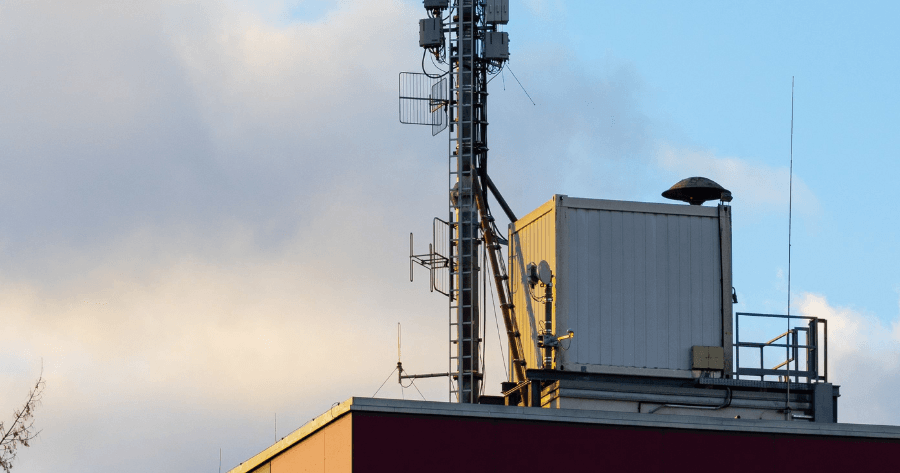
The 5G buildout across Devon and the Greater Edmonton Area is not slowing down, and the crews who adapt their rescue training now will be
the ones best positioned to handle it safely as volume increases. That means treating small cell rescue scenarios as their own training
category, building rescue competency across more of the crew rather than a select few, and giving experienced macro tower technicians a real
refresher on the differences rather than assuming the skills carry over automatically. MI Safety works with crews across the region to build
rescue training programs that reflect the sites they are actually working on. Contact MI
Safety
to set up a consultation and get your team ready for what small cell and 5G work actually demands on site.
What is the difference between macro tower and small cell rescue training?
Macro tower rescue training focuses on tall, isolated structures with long descent distances and predictable anchor points. Small cell rescue training addresses lower-height sites with cluttered access, such as rooftops with HVAC units and parapets, or utility pole mounts in public areas. The core rescue skills overlap, but the site conditions and response timelines are different enough that each needs its own scenario-based training.
Does a crew that is already certified for macro tower work need separate training for small cell sites?
Yes. Certification confirms a baseline of rescue competency, but it does not automatically prepare a technician for the specific hazards found on small cell installations. A refresher that walks through the mounting hardware, anchor points, and access conditions typical of small cell sites helps close that gap before it becomes an issue in the field.
How often should crews doing high-volume small cell work refresh their rescue training?
This depends on crew turnover, site variety, and how frequently rescue-competent staff are actually practicing their skills on live sites. Crews cycling through many small cell locations in a short period benefit from more frequent refreshers than crews working a smaller number of larger, similar sites.
Who should get rescue training on a small cell project?
Ideally, more than one or two people on a crew. Because small cell projects involve higher site volume and faster turnaround than macro tower work, spreading rescue competency across more of the team keeps response times fast no matter which site or shift is affected.
Where can crews in the region get small cell and 5G rescue training?
MI Safety provides safety training in the Greater Edmonton Area, including Devon, tailored to the site types crews are actually encountering on 5G buildout projects. Contact MI Safety to talk through a training plan for your crew.