Posted: Sep 1
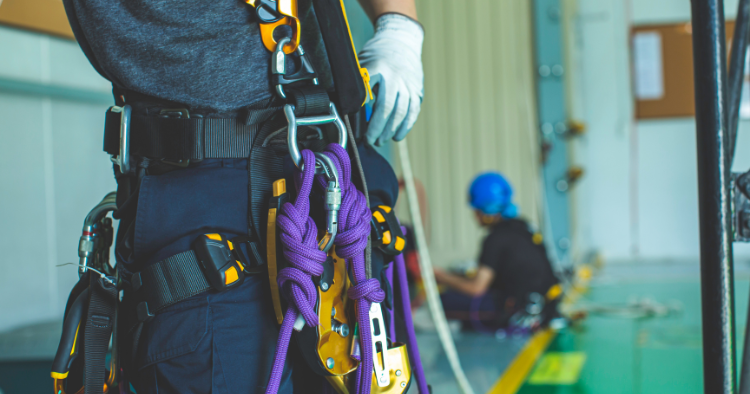
If your crew works at height, a written rescue plan isn't optional paperwork. It's a legal requirement under Alberta OHS, and it's the
difference between a controlled response and a chaotic scramble when something goes wrong. Fall arrest training covers what happens before a
fall. A rescue plan covers what happens after. Crews across the Greater Edmonton Area need both, and too many sites still treat the second
half as an afterthought. Contact MI Safety to talk through what your current plan is missing.
Alberta's Occupational Health and Safety Code is clear on this point: anywhere workers are exposed to a fall hazard and are required to use a fall arrest system, there must be a written rescue plan in place before work begins. This isn't a suggestion buried in guidance material. It's a code requirement, and it applies regardless of industry, whether you're working on a drilling rig, a communications tower, a wind turbine, or a mid-rise building.
The reasoning behind this requirement is straightforward. A worker suspended in a fall arrest harness after a fall is at risk of suspension trauma within minutes, not hours. Waiting for emergency services to arrive and figure out the site from scratch can turn a survivable fall into a fatality. Alberta OHS requires employers to have already worked through the how, who, and how fast before anyone clips into an anchor point. Fall arrest training should always be paired with this planning step, because training a worker to arrest a fall without a plan for what happens next only solves part of the problem.
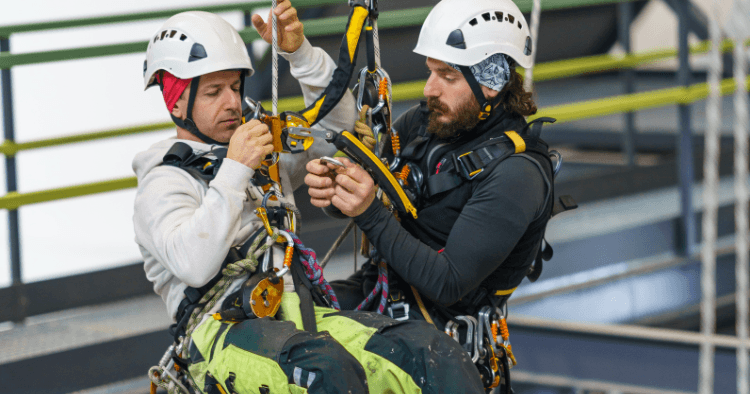
A compliant rescue plan isn't a single paragraph stating that "rescue will occur promptly." It needs to spell out specifics:
Vague language costs lives and it costs employers in a regulatory review after an incident. A plan that says "call 911" without addressing suspension trauma risk in the interim doesn't meet the intent of the code, even if it technically mentions a response.
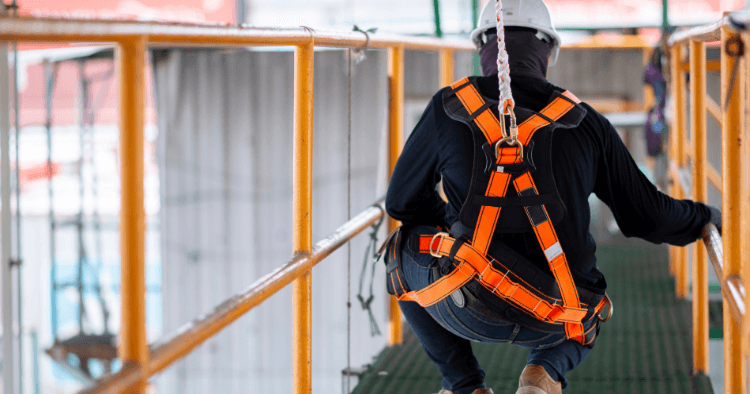
Not every site needs the same rescue model, and choosing the right one starts with an honest look at the hazards and the workforce.
Self-rescue works where a fallen worker can use their own equipment, such as a descent device attached to their harness, to lower themselves to safety without outside help. This model depends on the worker remaining conscious and capable after the fall, so it's rarely appropriate as a sole strategy for higher-risk work.
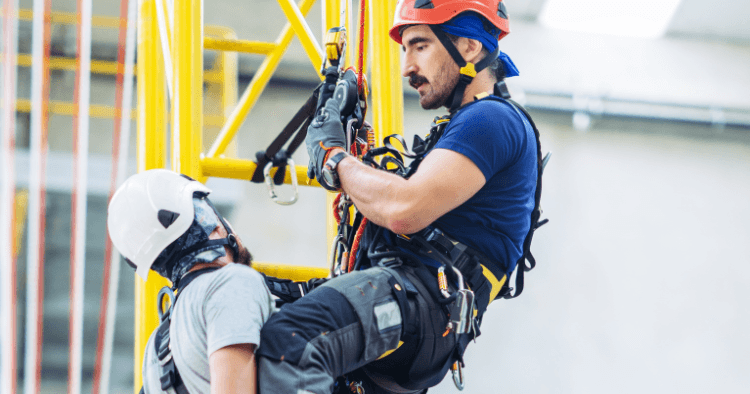
Assisted rescue relies on trained co-workers already on site to carry out the retrieval using pre-positioned equipment. This is common on construction and building sites where a small rescue-trained crew can reach the anchor point quickly.
Standby rescue teams are dedicated personnel, sometimes third-party, who remain on site specifically to respond if a fall occurs. This model is typical for remote or high-consequence sites, including rig work and tower climbing, where distance from emergency services or the complexity of the structure makes self-rescue or assisted rescue impractical. Rope rescue standby services fill exactly this gap for employers who don't have the in-house capacity to maintain a dedicated rescue team.
The core requirements of a rescue plan stay consistent across industries, but the details change significantly depending on the structure.
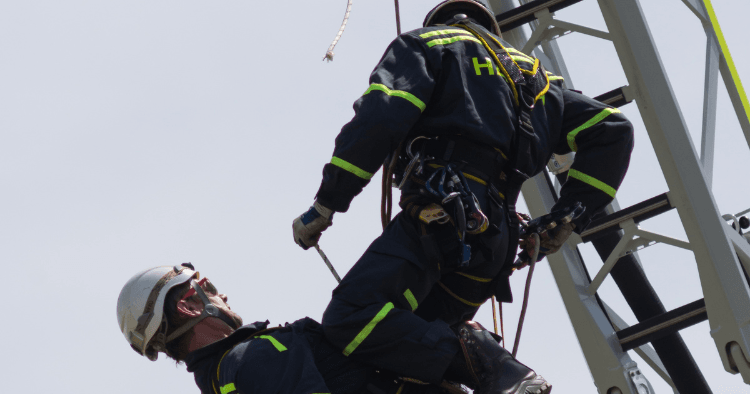
On a drilling rig, rescue plans need to account for derrick height, confined access points, and the likelihood that a fall could occur in proximity to moving equipment. On communications towers, the plan has to address the climber's location relative to guy wires, antennas, and other obstructions that complicate a straight-line retrieval. Wind turbine rescue plans deal with the added complexity of nacelle access, internal ladder systems, and confirming that rescue personnel can reach a worker inside the tower structure, not just at the top. Building sites, particularly mid-rise and high-rise construction, often have more straightforward access via stairwells or hoists, but density of workers and overlapping trades can complicate a fast response.
A generic rescue plan template that ignores these structural differences won't hold up to scrutiny, and more importantly, it won't actually work when it's needed.
A solid starting structure includes: a site description and hazard summary, the specific fall protection systems in use, the designated rescue method for each work area, a list of rescue equipment with inspection dates, named and certified rescue personnel, a step-by-step response sequence from fall detection to medical handoff, and a communication plan covering who calls emergency services and when. Every plan should also include a schedule for practice drills, since a plan that's never been rehearsed tends to fall apart under real pressure.
This structure isn't meant to be filled in once and filed away. It needs to be reviewed whenever the site changes, whenever personnel change, and at minimum on a regular schedule set by your safety management system.
Building a rescue plan that actually meets Alberta OHS requirements takes more than a template pulled off the internet. It takes a real
assessment of your site, your crew, and the specific fall hazards you're managing day to day. MI Safety works directly with Alberta
employers to build rescue plans that hold up, alongside the fall arrest training crews need to execute them. Contact MI Safety to start
building a plan that works when it matters.