Posted: Jun 1

Every worksite has its quirks. The loading dock that floods after heavy rain. The mezzanine with the blind corner that everyone on your crew
knows about but nobody has ever officially documented. The piece of equipment that runs a little hotter than the manual suggests. These are
the details that don't make it into generic safety manuals, and they're often the details that matter most. If your team is relying on
standardized training that has never set foot on your actual floor, those gaps aren't just inconvenient. They're invisible. That's exactly
why onsite training courses exist, and why they work differently than anything you can pull off a shelf. If you're ready to address the
blind spots in your facility's safety programme, reach out to MI Safety today.
Generic training materials are written to cover the broadest possible range of workplaces. That's their job. But the average industrial facility is actually anything but average. Your warehouse layout, your equipment configuration, your shift patterns, your traffic flow, your chemical storage setup, these are specific to you. A manual written for the general case can't account for the particular case, which means your workers are trained on an abstraction of their workplace rather than the actual one. Onsite training courses close that gap by bringing the curriculum to the site, not asking the site to conform to the curriculum.

Every experienced worker on your team carries a mental map of risks that never got written down. They know which aisle gets congested during shift change. They know that the overhead crane has a longer swing arc than the posted specs suggest. They know that the emergency exit on the north wall sticks in cold weather. This kind of institutional knowledge lives in people's heads and gets passed along informally, if it gets passed along at all. The problem is that informal knowledge transfer is inconsistent and invisible to new hires. One of the real strengths of onsite training courses is that they create a structured opportunity to surface this unwritten knowledge and make it part of the official training record. A trainer walking your floor will ask the questions that prompt your experienced workers to name the things they've always just known.
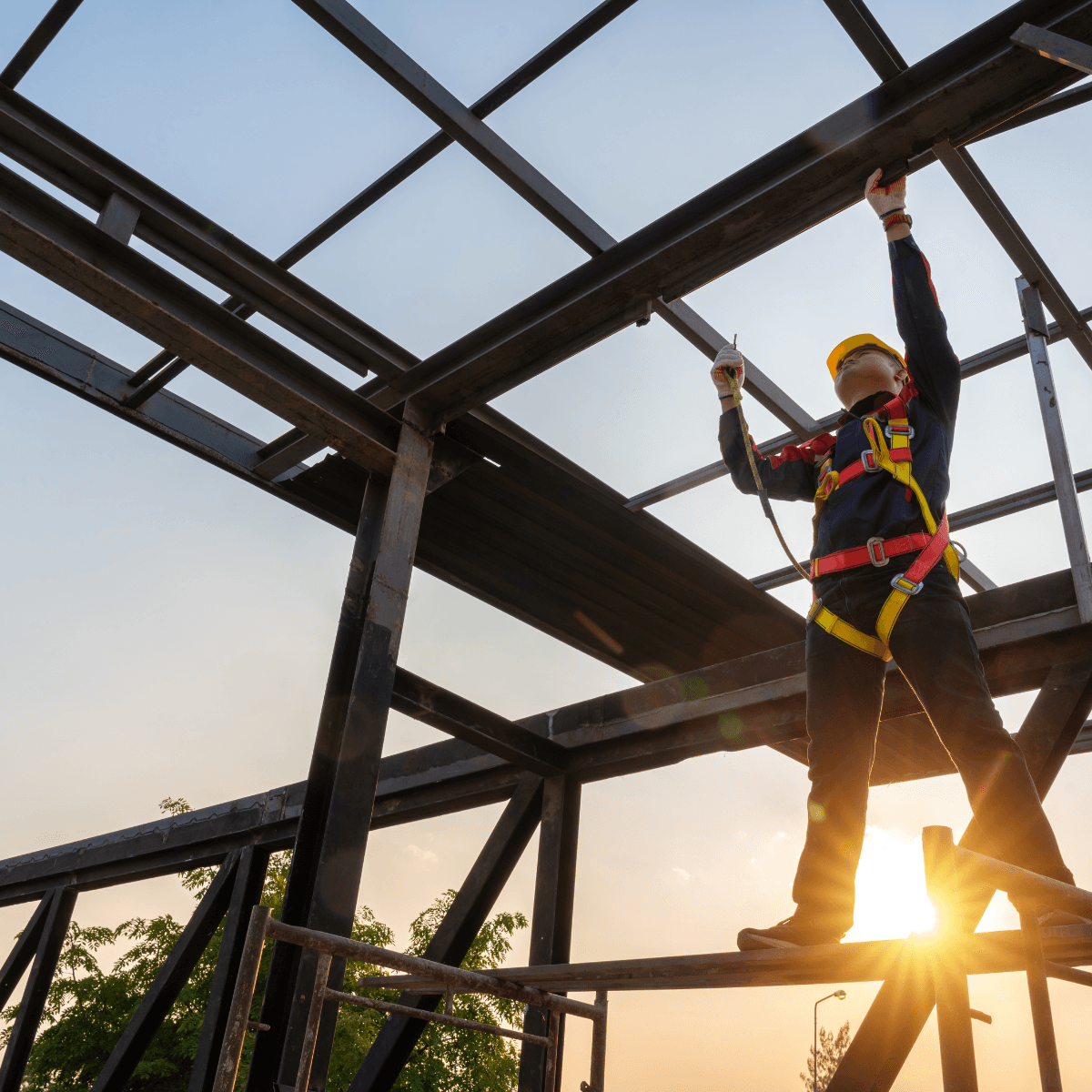
There's a well-documented phenomenon in safety circles sometimes called "normalization of deviance." It's what happens when a team has been operating around a problem for so long that the problem stops feeling like a problem. The pallet that's always stacked slightly too high. The missing guard on the secondary conveyor. The spill kit that's three aisles away from where it should be. When you see something every day, you stop seeing it. An external trainer coming in to deliver onsite training courses brings a perspective your team can't give itself. They haven't adapted to your workarounds. They notice what's out of place because they don't have a baseline that normalizes it.
This is one of the most underrated arguments for investing in professional onsite training courses rather than relying on internal-only instruction. Your internal trainers are valuable. They know your operations deeply. But they're also subject to the same normalization effects as the rest of your team. A fresh set of trained eyes isn't a criticism of your internal people. It's a complement to them.

One of the things that makes onsite training courses genuinely effective is the ability to use your actual environment as the training environment. When a trainer can walk a worker to the exact piece of equipment they'll be operating and demonstrate the specific hazard associated with that specific machine in that specific location, retention improves significantly. Abstract learning and applied learning are different. "There may be pinch points near rotating equipment" is a lot less memorable than standing in front of the actual rotating equipment on your floor while a trainer shows you exactly where the pinch point is.
The same logic applies to emergency procedures. Running a drill that reflects your actual muster points, your actual exit routes, and your actual communication protocols creates a different kind of muscle memory than practicing a hypothetical version of those things in a classroom somewhere else. Onsite training courses allow for that specificity, and specificity is what makes training stick.
Safety culture isn't built in a single training session, but a single training session can either reinforce it or undermine it. When workers go through onsite training courses that clearly reflect their actual workplace, the implicit message is that this training was designed for them. That matters. It signals that safety is taken seriously enough to be personalized, not just checked off a list.
Conversely, when training clearly could apply to any site anywhere, it can inadvertently communicate the opposite. Workers are perceptive.
They can tell when something was written for someone else and adapted loosely for them. The more your training reflects your actual
operations, your actual hazards, and your actual people, the more seriously your team is likely to take it.

Customized onsite training courses also make it easier to address sector-specific and role-specific risks. A confined space training that accounts for the actual confined spaces on your site, sized and configured the way yours are, is more useful than a confined space training designed for spaces that don't resemble yours at all.
Your site has hazards that no generic programme was designed to find. Onsite training courses are the most direct way to close that gap, surface the unwritten risks, and build a safety culture that actually fits the workplace you have.
Ready to bring training to your floor? Contact MI Safety to learn how our onsite training courses can be customized for your facility, your team, and your specific hazards.